
Uncategorized
How to Remove Mould from a Suede Leather Jacket at Home
Aug
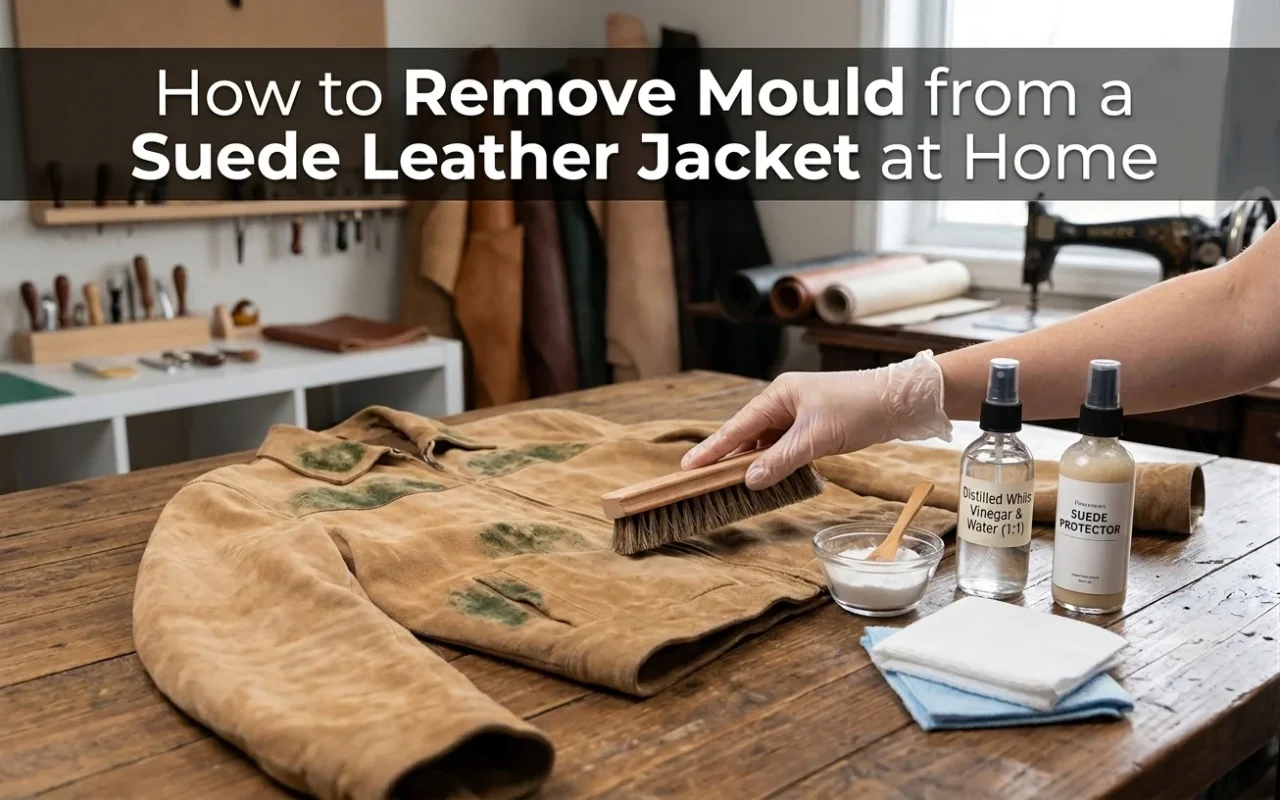
Mould on a suede leather jacket can be frustrating, especially when you notice white, greenish, or dusty-looking spots after the jacket has been stored for a while. A musty smell may also appear along with the visible mould.
Mould usually develops when a jacket is exposed to moisture, humidity, and poor airflow. The good news is that early surface mould can sometimes be addressed with careful cleaning and proper drying. However, suede is sensitive to moisture and cleaning products, so rushing the process can cause more damage.
In this guide, JacketStars explains what to do when you discover mould on a suede leather jacket and how to reduce the chances of it returning.
Table of Contents
- Why Does Mould Appear on Suede?
- Before You Start Cleaning
- Step-by-Step Guide to Removing Mould
- What to Do After Cleaning
- Common Mistakes to Avoid
- How to Prevent Mould from Returning
- When to Contact a Professional Cleaner
- Final Thoughts
- Frequently Asked Questions
Why Does Mould Appear on Suede?
Moisture is one of the main factors that can contribute to mould growth.
A suede jacket may develop mould when it is stored in a humid wardrobe, exposed to damp conditions, or put away before it has completely dried.
Poor ventilation can make the problem worse because moisture has fewer opportunities to escape.
Common factors include:
- High humidity
- Damp storage areas
- Poor airflow
- Storing the jacket while it is still damp
- Long periods of storage without ventilation
- Exposure to rain or other moisture
A musty smell can sometimes appear before visible mould becomes noticeable.
Before You Start Cleaning
Before attempting to clean mould from suede, take a moment to inspect the jacket.
First, check the care label. Some suede garments have specific cleaning requirements, and those instructions should take priority.
Because mould can release particles into the surrounding environment, avoid shaking or brushing a mouldy jacket indoors.
Move the jacket to a well-ventilated area and, if possible, work outdoors.
You may need:
- A suitable suede brush
- A clean, dry cloth
- Protective gloves
- A suitable garment hanger
- A well-ventilated drying area
Avoid experimenting with household chemicals before checking whether they are suitable for your particular suede jacket.
Step-by-Step Guide to Removing Mould from a Suede Jacket
1. Move the Jacket to a Ventilated Area
Take the jacket outside or to a well-ventilated location.
Avoid shaking it aggressively because this can spread mould particles.
Keep the jacket away from other clothing until you have assessed and cleaned it.
2. Allow the Jacket to Dry
If the jacket is damp, allow it to dry naturally in a well-ventilated, shaded area.
Do not use a hair dryer, heater, radiator, or other direct heat source to speed up the process.
Excessive heat can affect suede’s texture and appearance.
3. Brush Away Loose Surface Mould
Once the jacket is completely dry, use a clean brush designed for suede.
Gently brush the affected area without applying excessive pressure.
The goal is to remove loose surface particles while avoiding unnecessary damage to the suede’s texture.
Do not aggressively scrub the affected area.
4. Be Careful With Cleaning Products
This is where many cleaning attempts go wrong.
Avoid automatically applying vinegar, rubbing alcohol, bleach, detergent, or other household products to suede.
Different suede garments can react differently to liquids and chemicals. A product that works on one material may stain or alter another.
If the care instructions recommend a particular suede-cleaning product, follow those instructions carefully and test it on a hidden area first where appropriate.
If there are no clear instructions, professional cleaning is the safer choice.
5. Let the Jacket Dry Naturally
After any approved cleaning method, allow the jacket to dry naturally in a shaded area with good airflow.
Do not expose it to direct heat.
Once completely dry, gently brush the suede again if appropriate to restore its surface texture.
What to Do After Cleaning
Once the jacket is dry, inspect it carefully.
Check:
- The previously affected areas
- The sleeves and cuffs
- The collar
- Pockets
- Seams
- The inside lining
- Any areas that were exposed to moisture
If the mould or musty smell remains, avoid repeatedly applying different cleaning products.
Repeated home treatments can make the problem worse, particularly on sensitive suede.
If mould continues to return, professional cleaning may be necessary.
Common Mistakes to Avoid
Using Too Much Water
Suede can be sensitive to moisture. Avoid soaking the jacket or attempting to wash it like ordinary clothing.
Scrubbing Aggressively
Hard brushing or scrubbing can affect the suede’s texture.
Use gentle movements instead.
Using Household Chemicals
Bleach, strong detergents, solvents, and untested DIY mixtures may cause discoloration or surface damage.
Drying With Direct Heat
Radiators, heaters, hair dryers, and strong heat can affect suede.
Allow the jacket to dry naturally according to its care instructions.
Cleaning It Indoors
If visible mould is present, avoid brushing or shaking the jacket inside your bedroom or wardrobe.
Choose a suitable ventilated location.
Mixing Different Cleaning Methods
If one method does not work, adding several other products is not necessarily better.
For persistent mould, professional cleaning is a better option than repeatedly experimenting at home.
How to Prevent Mould from Returning
Prevention starts with proper storage.
Keep the Jacket Dry
Never store the jacket while it is damp.
If it becomes wet, allow it to dry properly according to the care instructions before storing it.
Improve Airflow
Avoid keeping your jacket tightly packed between other clothes.
Give it enough space for air to circulate.
Avoid Damp Storage Areas
Do not store suede jackets in areas with persistent humidity or moisture.
A cool, dry storage environment is preferable.
Avoid Non-Breathable Plastic Covers
For long-term storage, avoid sealing a suede jacket in a way that traps moisture.
Use storage recommended for suede garments and allow appropriate airflow.
Check Stored Jackets Occasionally
If a jacket is stored for several months, check it periodically.
Early signs of moisture, musty smells, or surface spots are easier to address than a mould problem that has been left untreated.
When to Contact a Professional Cleaner
Home care may be appropriate for minor surface issues when the garment’s care instructions allow it.
However, professional cleaning is worth considering when:
- Mould covers a large area.
- The mould keeps returning.
- A strong musty smell remains.
- The suede texture has changed.
- The jacket has been exposed to significant moisture.
- You are unsure which cleaning product is safe.
- The care label recommends professional cleaning.
Choose a cleaner experienced in handling suede and leather garments.
Final Thoughts
Finding mould on your suede leather jacket does not mean you should immediately throw it away or start applying strong cleaning products.
The safest approach is to act carefully.
Move the jacket to a ventilated area, allow it to dry naturally, remove loose surface particles gently when appropriate, and follow the garment’s care instructions.
Most importantly, avoid excessive moisture, harsh chemicals, aggressive scrubbing, and direct heat.
If the mould is extensive or keeps returning, professional cleaning is the better option.
With suitable storage, good airflow, and regular checks, you can also reduce the chances of mould developing again.